
Autonomous flight software aims to make search and rescue drones more effective
Autonomous flight software aims to make search and rescue drones more effective
This story is adapted from a version published by Aerospace America. Read the full story.
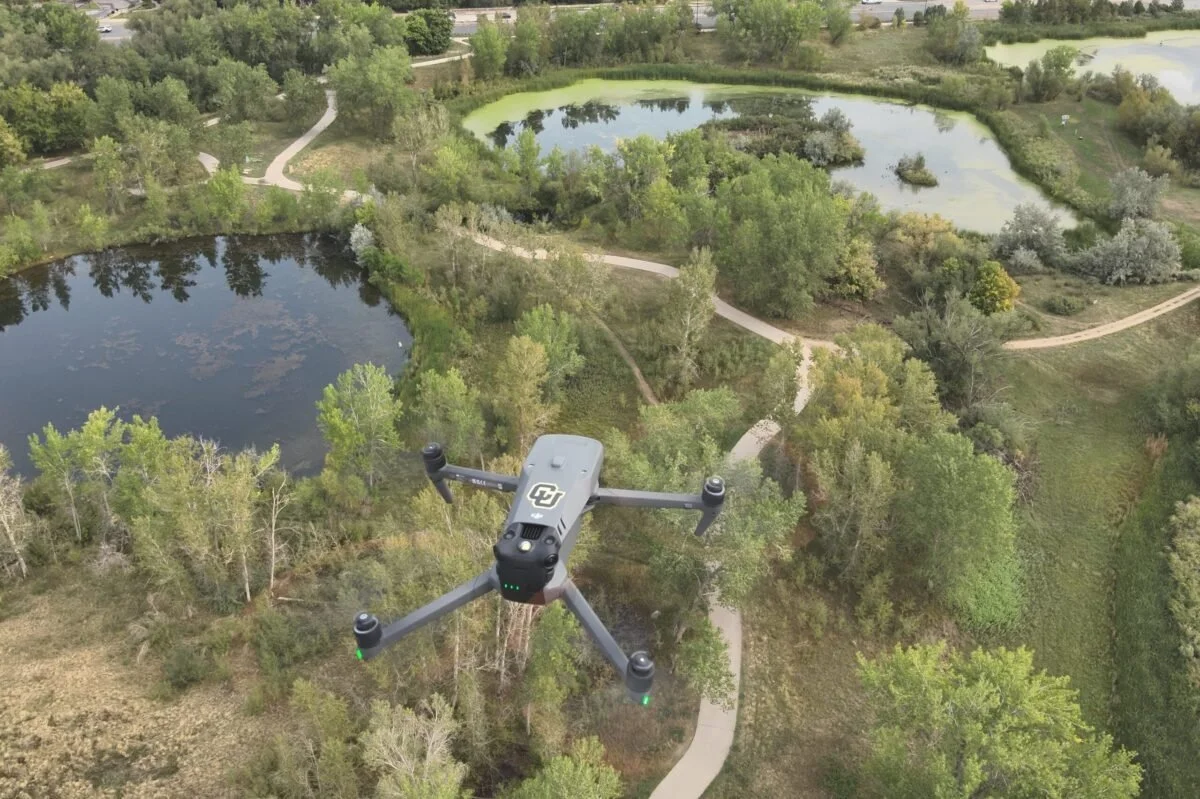
A drone flies above the east campus of the University of Colorado Boulder, as part of tests of autonomous flight software. Credit: Hunter Ray
By Keith Button - December 23, 2025
Darren Keralla typically flies drones on search and rescue missions for lost hikers or those injured in some kind of accident. But in July, researchers at the University of Colorado Boulder enlisted him in a search for traffic cones scattered across their campus — part of a test of autonomous flight software for search and rescue drones.
A military airplane had collided with another plane, spilling radioactive debris represented by six orange cones, according to the fictional scenario presented to Keralla and 33 other test subjects who flew drones for the study from June to August, half of whom had no prior experience operating drones.
Keralla, head of the drone unit for the volunteer Douglas County Search and Rescue Team in Colorado, controlled the test drone with a computer tablet loaded with the software. He was given 40 minutes to find the cones, all while avoiding fake helicopter medical evacuation traffic, tending to “distraction” tasks designed to take his attention away from the drone’s camera, and listening to radio communications from mock ground teams to pick up clues about the cone locations.